How Long Is a Dog Pregnant? Gestation Period & Timeline
If your dog has recently mated, or you suspect she might be expecting, one of the first questions you will ask is: how long is a dog pregnant? The short answer is about 63 days, or roughly nine weeks. But the exact timing can vary, and knowing what happens week by week helps you prepare for the big day.
This guide explains the dog gestation period, the signs of pregnancy, a week-by-week timeline, and when to call your veterinarian.
How Long Is a Dog Pregnant? The Short Answer
On average, a dog’s pregnancy lasts 63 days counted from ovulation. Counted from the day of mating, the range is usually about 58 to 68 days. That wider range exists because sperm can survive in the female’s body for several days, and the egg needs time after ovulation to be ready for fertilization.
So when owners ask how long a dog is pregnant, the most accurate answer is “around nine weeks, give or take a few days.” Most puppies arrive between day 60 and day 65.
Why the Dog Gestation Period Varies
Not every dog follows the same schedule. Several things can affect the timeline:
- Timing of ovulation: If you only know the mating date, your estimate may be off by several days. A vet can pinpoint ovulation with hormone (progesterone) testing.
- Litter size: Larger litters sometimes arrive a little earlier, while very small litters may go slightly longer.
- Breed and size: Differences exist between breeds, though the 63-day average holds for most dogs.
- Individual differences: Like people, each dog is a little different.
If you want to know exactly how long your dog will be pregnant, ask your vet to help calculate a due date.
Early Signs of Dog Pregnancy
In the first few weeks, a pregnant dog often looks completely normal. Signs usually become clearer after the first month:
- Slightly reduced appetite, then increased appetite
- Mild “morning sickness” or occasional vomiting around week 3 or 4
- Enlarged, pinker nipples
- Clear or slightly mucus-like vaginal discharge
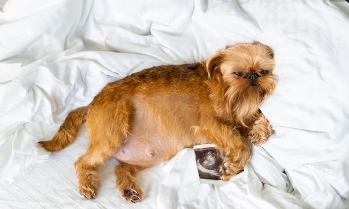
- Weight gain and a rounder belly
- More affection, or more tiredness than usual
- Nesting behavior, such as hiding or arranging blankets
These signs can also appear in a false pregnancy (pseudopregnancy), which is why a vet’s confirmation matters.
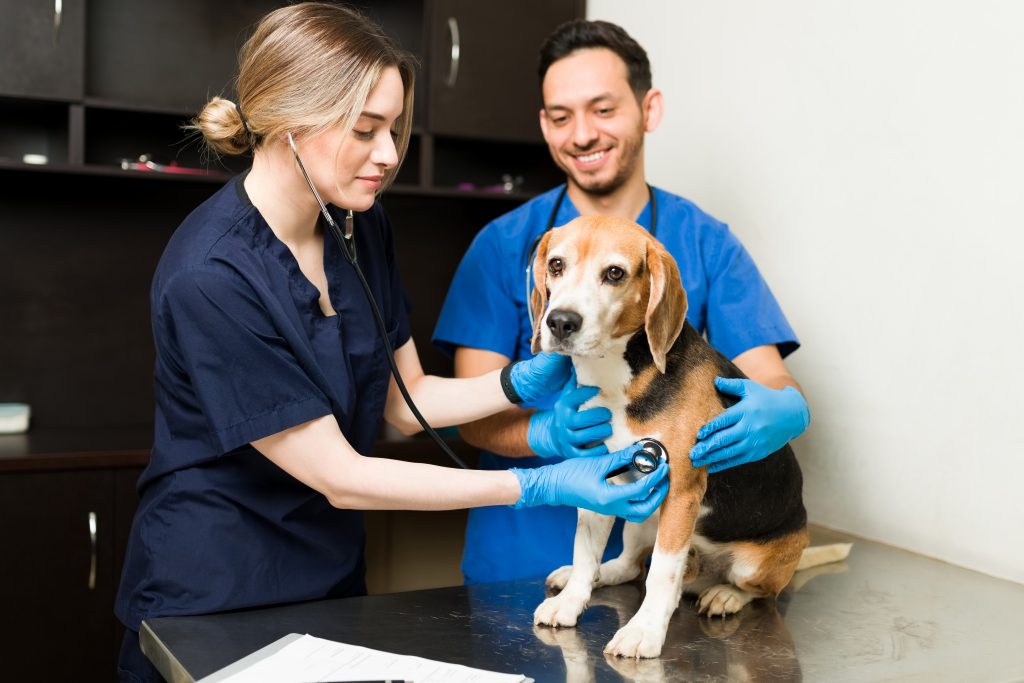
How Do Vets Confirm a Dog Pregnancy?
You cannot be sure from symptoms alone. Vets use several methods to confirm pregnancy:
- Ultrasound: Can detect pregnancy from around day 25 to 30, and show the puppies’ heartbeats.
- Blood test: A hormone called relaxin can be detected in the blood from roughly the fourth week.
- Abdominal palpation: Some experienced vets can feel the pregnancy around day 28 to 30, though this should only be done by a professional.
- X-ray: Done late in pregnancy, usually after day 45, to count the puppies and check their size.
Knowing the number of puppies helps you know when whelping is truly finished.
Dog Pregnancy Timeline: Week by Week
Here is what usually happens during the nine weeks of a dog’s pregnancy.
Weeks 1 and 2: Fertilization
The eggs are fertilized, and the embryos begin to travel toward the uterus. Your dog will likely behave normally and show no visible changes.
Week 3: Implantation
Around day 16 to 18, the embryos attach to the uterine wall. Some dogs begin to feel nauseated, and a few eat less. You may notice mild changes in energy.
Week 4: Early Development
The embryos develop quickly, and a vet can often confirm the pregnancy by ultrasound around this time. Your dog’s nipples may begin to enlarge, and a clear discharge may appear.
Week 5: The Fetal Stage
The puppies now look like tiny dogs and begin to grow rapidly. Your dog may gain weight and have a bigger appetite. This is a good time to talk with your vet about diet and prenatal care.
Week 6: Visible Changes
Her belly becomes noticeably rounder, and her body is working hard. The puppies’ skeletons begin to form, which is why X-rays become useful later. Keep exercise gentle and avoid rough play.
Week 7: Preparing for Birth
Puppies grow quickly, and your dog may seem uncomfortable. Her nipples enlarge further, and some dogs begin to produce a little milk. Nesting behavior usually starts, so it is time to prepare the whelping area.
Week 8: Final Stretch
You may see or feel puppies moving inside her belly. Your dog may eat less because there is less room in her stomach. Many vets schedule an X-ray during this time to count the puppies.
Week 9: Labor Approaches
Your dog is close to delivery. Many dogs become restless, pant, refuse food, or dig at bedding. A drop in body temperature, often below about 99°F (37.2°C), commonly appears within 24 hours before labor starts. Your vet can show you how to take her temperature correctly.
How to Care for a Pregnant Dog
Good care throughout the dog gestation period helps both the mother and the puppies.
- Visit your vet early. Confirm the pregnancy, get a due date estimate, and ask about parasite control and vaccines that are safe during pregnancy.
- Ask about nutrition. Pregnant dogs often need a diet adjustment, especially in the last weeks. Your vet can recommend the right food and amounts for her size and stage.
- Keep exercise gentle. Short walks are usually fine, but avoid rough play, jumping, and long hikes.
- Avoid medications and supplements without approval. Some can harm developing puppies.
- Provide fresh water. Keep it available at all times.
- Reduce stress. A calm, quiet home helps her relax.
Preparing for Whelping
Around week 7, set up a quiet, warm, comfortable place for your dog to give birth. This is called a whelping box. Line it with clean towels or bedding that you can change easily.
Gather these supplies in advance:
- Clean towels
- A thermometer
- Your vet’s phone number and an emergency clinic’s number
- A heat source suitable for newborn puppies, as advised by your vet
- Clean scissors and unscented dental floss, only if your vet has shown you how to use them
Whelping in dogs has three stages: early restlessness and contractions, delivery of the puppies, and passing of the afterbirth. Puppies usually arrive anywhere from a few minutes to about an hour or two apart, though your vet can tell you what is normal.
Signs of Trouble: When to Call the Vet
Most dogs deliver without problems, but some need help. Contact your vet or an emergency clinic right away if you see:
- Strong, regular contractions for 30 to 60 minutes with no puppy appearing
- A long gap between puppies when your dog is still clearly in labor or you know more puppies remain
- Green or bloody discharge before the first puppy is born
- Your dog is past day 68 or 70 from mating with no signs of labor
- Fever, extreme weakness, or severe lethargy
- Heavy vaginal bleeding
- Foul-smelling discharge
- Repeated vomiting or collapse
Small breeds, flat-faced breeds, and dogs carrying very large or very small litters have a higher chance of complications. Ask your vet in advance whether a planned C-section might be wise for your dog.
After the Birth
Once the puppies arrive, watch the mother closely. Make sure every puppy is nursing and gaining weight. Call your vet if the mother has a fever, refuses food for long, shows no interest in her puppies, or has unusual discharge.
Schedule a post-birth checkup for the mother and the puppies, usually within a day or two of delivery.
Final Thoughts
So, how long is a dog pregnant? About 63 days, or nine weeks, though the range from mating can stretch from 58 to 68 days. Knowing the week-by-week timeline helps you spot normal changes, prepare for whelping, and recognize problems early. Work with your veterinarian from the start, and call right away if anything seems wrong.