Aggressive Dog Training: Causes, Fixes & Safe Methods
If your dog growls, snaps, or lunges at people or other dogs, you are not alone. Aggressive dog training is one of the most searched topics among U.S. dog owners, and for good reason. Aggression is stressful, embarrassing, and sometimes dangerous. The good news is that most aggressive behavior has an identifiable cause, and many dogs improve with patience, a clear plan, and the right support. This guide explains why dogs act aggressively, how to stay safe, and which methods work best for aggressive dog training at home and with a professional.
What Is Dog Aggression?
Dog aggression is any behavior meant to create distance or threaten a person, animal, or object. It ranges from mild warnings, like a stiff body or a lip lift, to serious actions, like snapping and biting. Aggression is communication. A dog who growls is saying, “I am uncomfortable, please stop.” Effective aggressive dog training starts with understanding that message instead of punishing it.
Common Causes of Aggression in Dogs
Every successful aggressive dog training plan begins with finding the trigger. The most common causes include:
Fear. Fear is the leading cause of aggression. A scared dog that cannot escape may bark, lunge, or bite as a last resort. Dogs with limited early socialization are especially prone to this.
Resource guarding. Some dogs guard food, toys, beds, or even favorite people. They may freeze, growl, or snap when someone gets close.
Pain or illness. Arthritis, dental disease, ear infections, thyroid problems, and neurological conditions can make a dog irritable. A sudden change in behavior is a strong clue that something medical is going on.
Territorial or protective behavior. Dogs may react to visitors, delivery drivers, or other animals near their home, yard, or car.
Frustration and leash reactivity. A dog who wants to greet another dog but is held back by a leash can build up frustration that looks like aggression.
Redirected aggression. When a dog is aroused by something it cannot reach, it may turn on a nearby person or pet.
Lack of socialization or past trauma. Dogs that were not exposed to new people, places, and sounds as puppies, or that were abused, may be more defensive.
Warning Signs to Watch For
Most dogs give several signals before they bite. Learning to read them keeps everyone safer. Watch for:
- Stiff, frozen body posture
- Hard stare or “whale eye” (showing the whites of the eyes)
- Lip licking, yawning, or turning away
- Raised hackles
- Showing teeth or curling the lip
- Low growling
- Tail held high and stiff, or tucked tightly
Never punish a growl. A dog that is scolded for growling may learn to hide the warning and go straight to biting.
Step One: Rule Out Medical Problems
Before starting aggressive dog training, book a full exam with your veterinarian. Pain and illness are often overlooked causes of sudden aggression. Your vet can run blood work, check for injuries, and discuss whether anxiety medication might help alongside training. In complex cases, your vet may refer you to a veterinary behaviorist, who is a licensed veterinarian with advanced training in behavior.
Step Two: Prioritize Safety
Safety comes first in any aggressive dog training program. Until your dog is reliable, use these precautions:
- Manage the environment. Use baby gates, closed doors, or crates to keep your dog away from triggers.
- Leash and harness. Keep your dog on a secure leash in public and use a well-fitted harness or head halter.
- Muzzle training. A basket muzzle is a safety tool, not a punishment. When introduced slowly with treats, most dogs accept it well. It allows you to train around triggers with less risk.
- Supervise closely. Never leave an aggressive dog unsupervised with children or guests.
- Keep a log. Write down when, where, and why incidents happen. Patterns will help you and your trainer.
Safe, Science-Based Methods That Work
Positive Reinforcement
Positive reinforcement is the foundation of modern aggressive dog training. You reward the behavior you want, such as calm focus, with treats, praise, or play. Rewarding good choices builds confidence and trust, while harsh corrections can raise fear and make aggression worse. Major veterinary and behavior organizations in the United States recommend reward-based methods over punishment-based ones.
Desensitization and Counterconditioning
These two techniques are the core of most behavior modification plans. Desensitization means exposing your dog to a trigger at a very low intensity, far enough away that your dog stays calm. Counterconditioning means pairing that trigger with something wonderful, like chicken or cheese, so the dog learns that the trigger predicts good things.
For example, if your dog reacts to other dogs, start at a distance where your dog notices another dog but does not react. Feed treats the moment the dog sees it. Over days and weeks, slowly reduce the distance. If your dog reacts, you moved too fast, so increase the space again. Aggressive dog training works best when you change how the dog feels, not just how the dog behaves.
Impulse Control and Focus Skills
Teaching your dog to look at you on cue gives you a way to redirect attention. Practice these basics in low-distraction places first:
- “Watch me” or “Look”: Reward eye contact.
- “Leave it”: Teach your dog to ignore items or triggers.
- “Sit” and “Stay”: Build calm, controlled behavior.
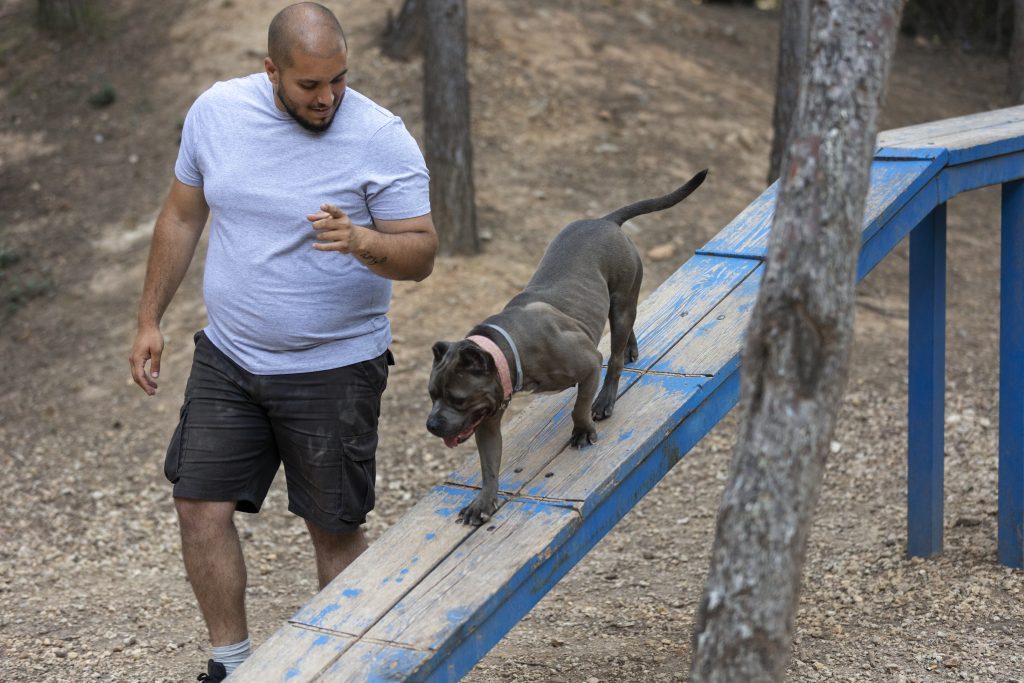
- Emergency U-turn: Teach your dog to happily turn and follow you away from a trigger.
Teaching Alternative Behaviors
Instead of only stopping the unwanted behavior, give your dog something else to do. A dog who guards a bone can learn to trade for a high-value treat. A dog who barks at the door can learn to go to a mat and wait for a reward.
A Simple Plan for Aggressive Dog Training at Home
Here is a basic framework you can follow for aggressive dog training at home. For serious aggression, use it only with guidance from a qualified professional.
- Identify triggers. List exactly what sets your dog off, such as strangers, bikes, or food bowls.
- Find the threshold. Determine the distance or intensity at which your dog notices the trigger but stays calm.
- Train below threshold. Reward calm behavior at that level.
- Increase difficulty slowly. Move closer or add intensity in tiny steps over many sessions.
- Keep sessions short. Five to ten minutes is plenty, and always end on a success.
- Meet physical and mental needs. Daily walks, sniffing time, puzzle feeders, and play reduce stress and extra energy.
- Stay consistent. Everyone in the household should use the same rules and cues.
What Not to Do
Old-school aggressive dog training that relies on choke chains, prong collars, shock collars, or “alpha rolls” can do real harm. These tools may suppress warning signs without fixing the cause, and they can increase fear, pain, and defensive biting. Avoid:
- Yelling at or hitting your dog
- Forcing your dog to face a trigger (“flooding”)
- Punishing growls
- Relying on dominance theory, which behavior experts have largely moved away from
- Giving up after a few days
When to Hire a Professional
Some cases need expert help. Seek a professional if your dog has bitten someone, shows aggression toward children, injures other animals, or if your own safety is at risk. Look for credentials such as:
- CPDT-KA: Certified Professional Dog Trainer, Knowledge Assessed
- CAAB or DACVB: Certified Applied Animal Behaviorist or board-certified veterinary behaviorist
- Fear Free certified professionals
Ask any trainer about their methods. A good one will explain their plan, use reward-based techniques, and never promise a quick fix. Be cautious of anyone who guarantees results or relies on pain or intimidation.
Is Aggression a Breed Problem?
Not really. Aggressive dog training is not about a particular breed. Genetics can influence temperament, but individual history, socialization, health, and training matter much more. Any dog, from a Chihuahua to a Labrador, can show aggression if frightened or stressed. Judge your dog as an individual, not by a stereotype.
Puppies: Prevention Is the Best Medicine
Early socialization can reduce the need for aggressive dog training later. Between about 3 and 14 weeks of age, introduce your puppy safely to different people, surfaces, sounds, and friendly, vaccinated dogs. Keep experiences positive and never force interactions. Enroll in a reward-based puppy class and teach gentle handling, such as touching paws, ears, and food bowls, while giving treats.
How Long Does Aggressive Dog Training Take?
There is no set timeline. Mild cases may improve in a few weeks, while deeper fear or long-standing aggression can take months or longer. Progress is rarely a straight line, and setbacks are normal. The goal is often management and improvement, not a “cure.” Many dogs become safe and comfortable with ongoing training, but owners should always keep management tools in place.
Final Thoughts
Living with a reactive or aggressive dog can feel overwhelming, but you do not have to figure it out alone. Aggressive dog training works best when you start with a vet check, identify triggers, prioritize safety, and use reward-based methods like desensitization and counterconditioning. Be patient, celebrate small wins, and bring in a qualified professional when needed. With time, consistency, and compassion, many dogs learn to feel safer, and their owners gain peace of mind. Done right, aggressive dog training strengthens trust and improves life for both of you.